
 EN
 ar
 bg
 hr
 cs
 da
 nl
 fi
 fr
 de
 el
 hi
 it
 ko
 no
 pl
 pt
 ro
 ru
 es
 sv
 tl
 iw
 id
 lv
 lt
 sr
 sk
 sl
 uk
 vi
 et
 hu
 th
 tr
 fa
 ms
 hy
 ka
 ur
 bn
 mn
 ta
 kk
 uz
 ku

Multicore Shielded Test Cable
Core planning for Kingmach Multicore Shielded Test Cable should be finished before the cabinet layout is frozen. Two-core, three-core, and four-core formats support simpler instrument runs, while six-core, seven-core, nine-core, and ten-core formats help when several conductors need to follow one protected path. The local product data lists 2 m per piece for lower core counts and 6 m per piece for higher core counts. Buyers can use that information to prepare terminal blocks, labels, spare cores, and inspection notes before field crews start pulling cable.
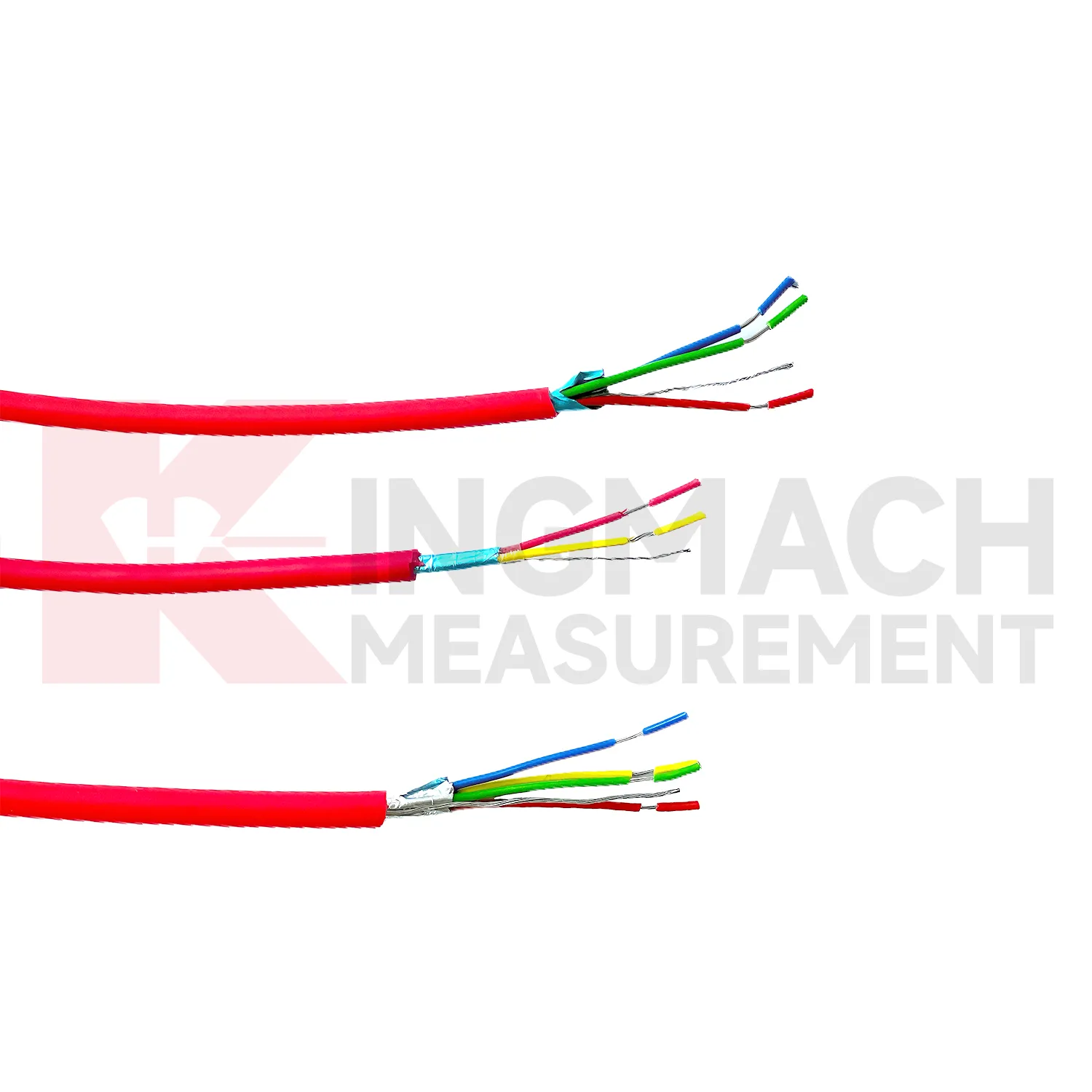
Application of Multicore Shielded Test Cable
Wind tower monitoring uses Kingmach Multicore Shielded Test Cable to connect strain, tilt, vibration, foundation, and environmental instruments exposed to moving structures and changing weather. Cables may run inside towers, around foundations, through junction boxes, or near power equipment. Shielding helps protect weak measurement signals near electrical systems, while wear resistance helps during repeated inspection or service work. When a tower vibration or tilt record changes, the team can inspect cable fixation, connector sealing, and cabinet entry before treating the reading as a structural issue.
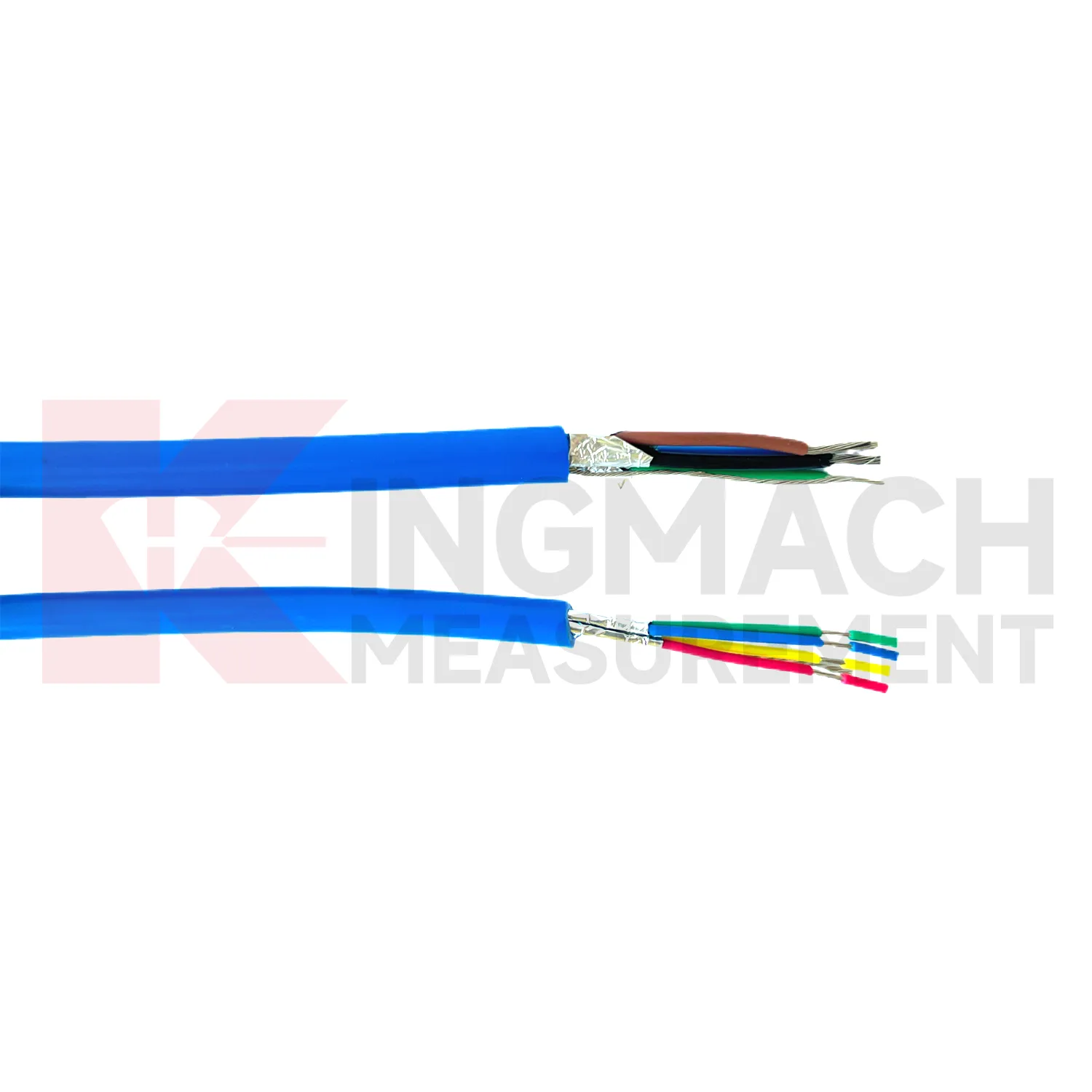
The future of Multicore Shielded Test Cable
Digital twin projects will use Kingmach Multicore Shielded Test Cable as part of the physical link between a real structure and its virtual record. A twin needs sensor data that can be traced back to known points, known channels, and known installation routes. Cable documentation will therefore become part of the model history, not merely a maintenance note. When a bridge, dam, tunnel, or building record changes, reviewers can check both structural behavior and cable condition before updating risk status or maintenance plans.
Care & Maintenance of Multicore Shielded Test Cable
Commissioning checks for Kingmach Multicore Shielded Test Cable should include continuity, insulation condition, channel identity, signal stability, and a short observation period under normal site conditions. A single instant reading is not enough when a cable route has just been installed. Watch for drift, intermittent drops, repeated spikes, or channel mixing. If the problem appears only when nearby equipment starts, review routing and shielding. If it appears after rain or washing, review sealing. These checks give the monitoring record a cleaner starting point.
Kingmach Multicore Shielded Test Cable
A reliable monitoring chain needs Kingmach Multicore Shielded Test Cable because sensor signals often travel through harsh physical zones before reaching a recorder. The cable may cross a bridge deck, run along a tunnel wall, pass through a wet gallery, sit near a pump room, or bend into a sealed cabinet. Each section adds risk: abrasion, pulling force, water entry, electromagnetic noise, or accidental damage during maintenance work. JMZX-XPX focuses on low-loss shielded transmission for precise testing. JMZX-XSX focuses on hydraulic environments where pressure resistance, tensile strength, and water resistance carry more weight. Matching those roles keeps field data closer to the real sensor output.
FAQ
Q: What are Kingmach Multicore Shielded Test Cable used for?
A: They connect monitoring sensors, acquisition equipment, cabinets, and data recorders while helping protect signal transmission in demanding field environments.
Q: Which cable models are listed in this category?
A: The local product pages list test dedicated shielded wire JMZX-XPX and hydraulic cable JMZX-XSX.
Q: What is JMZX-XPX designed for?
A: It is a shielded test wire with composite shielding for low-loss sensor signal transmission and resistance to EMI and RFI.
Q: What is JMZX-XSX designed for?
A: It is a hydraulic engineering cable with multi-layer sealing and water-resistant insulation for humid, underwater, or wet routes.
Q: Where are these cables commonly applied?
A: They are used in bridges, tunnels, slopes, buildings, dams, foundation pits, railways, hydraulic works, and mixed monitoring systems.
Reviews
James Thompson
The tiltmeters and accelerometers are very sensitive and provide precise data. Perfect for our structural health monitoring system.
Robert Taylor
The weir flow meter is well-built and delivers accurate measurements. Great value for water management applications.
Latest Inquiries
To protect the privacy of our buyers, only public service email domains like Gmail, Yahoo, and MSN will be displayed. Additionally, only a limited portion of the inquiry content will be shown.
Evelyn***@gmail.comSouth Africa
Hi, we are a contractor working on tunnel construction and need settlement sensors and displacement ...
Olivia***@gmail.comUnited States
Hello, we are currently sourcing high-precision strain gauges and load cells for a bridge monitoring...
Related product categories
- Hydraulic cable
- Instrumentation Cables
- Sensor Cables
- Twisted Pair Shielded Test Cable
- Doublelayer Shielded Test Cable
- Triplelayer Shielded Test Cable
- Singlelayer Shielded Test Cable
- Multicore Shielded Test Cable
- 2core / 4core / 6core / 8core Hydrological Cable
- Corrosionresistant Hydrological Cable
- Shielded Hydrological Cable
- Multicore Hydrological Cable